
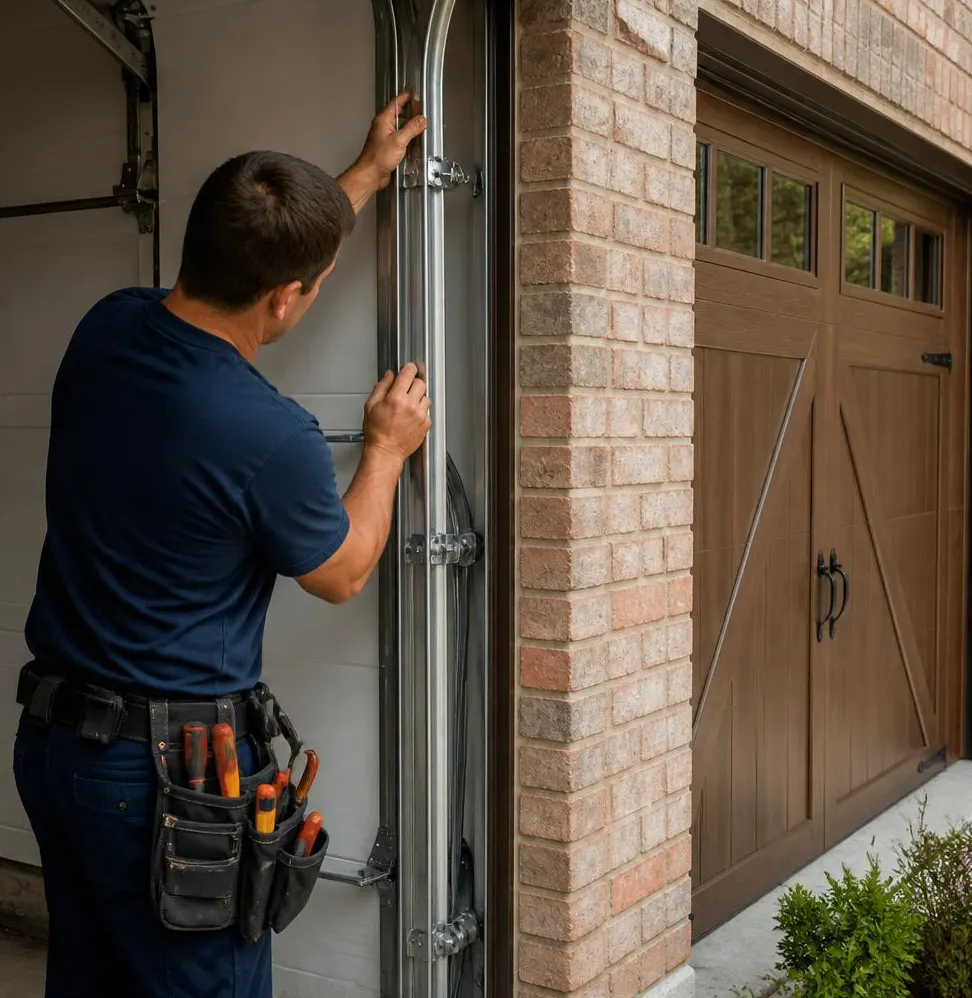
What We See on a Typical "Door Won't Open" Call
The call usually starts the same way: someone's trying to leave for work or pull into the driveway ahead of an afternoon storm, and the door simply won't go up. Sometimes the opener hums and nothing moves. Sometimes it's dead silent. Sometimes the door lifts six inches and stops. In this part of Florida, a lot of these calls land right after a hard summer storm knocked power out briefly, or after months of heat and humidity have been working on springs, cables, and tracks without anyone noticing until the day it finally gives out.
A technician doesn't guess at the cause — there's a specific order of checks that narrows it down fast. Here's that order, and what's actually involved at each step.
Step One: Confirm the Opener Has Power
Before touching anything mechanical, check whether the opener is getting electricity at all. A tripped breaker or a popped GFCI outlet in the garage is a common culprit, especially after a storm surge or a brief outage. No lights on the opener's logic board, no display, no sound when you press the wall button — that points here first. This is a quick fix: reset the breaker or outlet and see if the unit powers back up. If it trips again right away, there's a wiring or motor short that needs a closer look.
Step Two: Pull the Manual Release and Test by Hand
This is the step that splits the whole problem in two. With the opener disengaged (the red-handled cord hanging from the trolley), try lifting the door by hand, slowly, with both hands.
- Door is extremely heavy, won't lift, or only moves a few inches: the problem is almost certainly in the springs or cables, not the opener.
- Door lifts smoothly and evens out on its own: the springs are fine, and the issue is somewhere in the opener's drive system or settings.
This single test saves a lot of wasted time, because it tells the technician which half of the system to focus on.
Step Three: Check the Springs
Torsion springs (mounted on a bar above the door) and extension springs (stretched along the upper tracks) do almost all the lifting work. A broken torsion spring shows itself as a visible gap in the coil and a door that suddenly feels like dead weight — homeowners often report a loud bang days or weeks earlier, which was the spring letting go. Extension springs tend to fail more gradually, stretching, rusting, or fraying from repeated expansion and contraction in the heat and humidity.
The fix is spring replacement, matched to the door's weight and cycle rating. This is also the point where a technician will flag if springs are undersized or mismatched for the door — a common issue on older installs that haven't been updated.
Step Four: Inspect the Cables
Cables run alongside the springs and are just as load-bearing. A frayed or snapped cable causes the door to hang crooked, jam partway, or refuse to move evenly on both sides. Years of thermal cycling — doors swelling slightly in humidity and contracting in drier stretches — put repeated stress on these cables and their drums. The fix involves replacing the cable and checking drum alignment so the door lifts level on both sides, not just slapping a new cable on and hoping it holds.
Step Five: Look at the Tracks and Rollers
If the manual test showed the door moving but catching or grinding partway, the tracks are next. Rust from moisture buildup, a track bent by wind pressure during a storm, or rollers that have seized up all show the same symptom: the door moves part of the way and then stalls or jumps. The fix ranges from realigning a slightly bent track to full roller and track maintenance, including lubrication and replacing rollers that have worn down or rusted solid.
Step Six: Check the Opener's Drive System
If power is confirmed and the manual test showed the door moving freely by hand, the problem is in the opener itself. A motor that hums but doesn't move the trolley usually means a slipped or snapped belt/chain, or a stripped drive gear — a known failure point on openers that have been running for years in a hot garage. The fix is replacing the belt, chain, or gear kit; if the opener is old enough that parts are hard to source, replacement is often the more practical call.
Step Seven: Travel Limits and Force Settings
Sometimes everything mechanical checks out fine, but the door still won't fully open. Humidity swelling can shift a door's weight and resistance enough, season to season, that the opener's travel limit or force setting is now miscalibrated — it thinks it's hit an obstruction and stops short. This is a settings adjustment, not a parts replacement, but it's easy to overlook if you're only looking for broken hardware.
When to Call Belleview Garage Door Pro
If the manual test shows a heavy, unmovable door, stop there and call — a broken torsion spring under tension is not a DIY repair, and neither is a snapped cable. That's where our Garage Door Spring Repair and Garage Door Cable Repair crews come in, matching the right spring weight to your door and setting cable tension so it lifts evenly. If the door's catching or grinding on the way up, our Off Track Door Repair service realigns tracks and replaces worn rollers before a small misalignment turns into a bent rail.
If your garage door in Belleview, Ocala, Summerfield, The Villages, or anywhere nearby won't open and you're not sure why, give Belleview Garage Door Pro a call. We'll run the same checks a technician always runs, find the actual cause, and get your door back in working order.