
What another season of "we'll deal with it later" actually costs
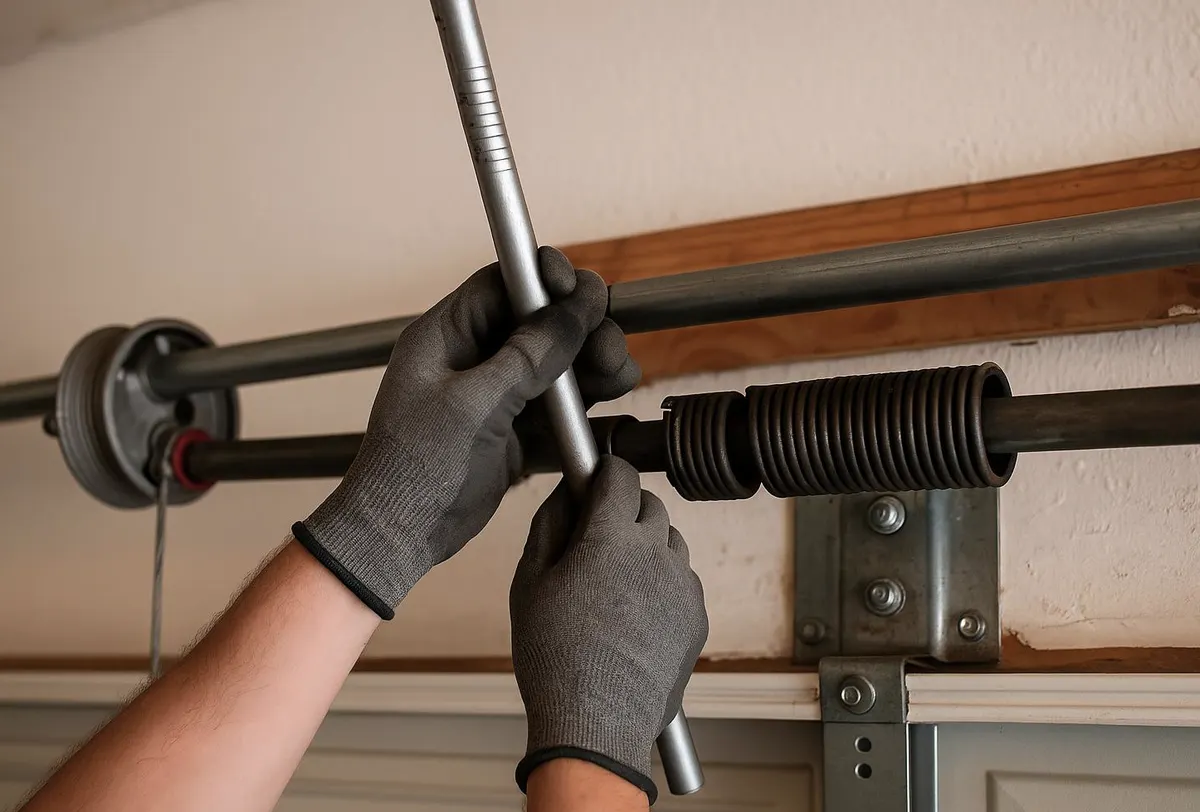
Here's the honest math: a torsion spring that's been slowly rusting since the Clinton administration doesn't fail on a calm Tuesday. It fails during a wind event, when the door is working hardest against pressure, or during an afternoon downpour when humidity has already swollen the panels and strained every moving part. Waiting one more season doesn't just mean the door stays old-fashioned — it means you're betting that a thirty-year-old safety reversal system, a corroded cable, or an unbraced panel holds up through another hurricane season. Sometimes that bet pays off. When it doesn't, you're looking at a door that won't close, a spring that whips loose, or panels that buckle under wind load — and all of that costs more, and is more dangerous, than fixing it now.
What needs to be retrofitted, no argument
Auto-reverse safety sensors
If the opener predates the early 1990s, there's a good chance it has no photo-eye sensors at all — meaning the door can close on a bike, a pet, or a person without stopping. This isn't a maintenance issue, it's a safety gap. Any opener without working auto-reverse sensors should be replaced, not patched.
Spring containment
Older torsion springs installed without a containment cable can whip violently when they snap. It's a cheap fix on its own, and most reputable spring repairs today include it standard. If yours doesn't have one, it's overdue.
Wind-load bracing
Doors built before wind-load standards were taken seriously often have thinner panels and lighter bracing. In an area that sees real hurricane-season wind, that matters. A door that looks fine in June can bow or blow in during a storm if it was never built or reinforced for the pressure. This is worth having checked specifically, not assumed.
Rusted hardware at hinges, rollers, and tracks
Humidity and salt air don't just make things ugly — they weaken the metal that holds the door together. Rust at hinge points or roller stems is a structural problem, not a cosmetic one, because it's exactly where the door takes the most stress every time it moves.
What can honestly wait
- Faded paint or a dated panel style — purely cosmetic, fix it whenever the budget allows.
- A manual lock bar that still works — if it latches cleanly and isn't rusted stuck, there's no urgency.
- Original wood-look doors that are still structurally sound — these often just need resealing against moisture, not replacement. Swelling from humidity is common but usually cosmetic if caught before it warps the frame.
- Slightly noisy rollers — annoying, not dangerous, as long as the door tracks straight and closes fully.
A five-minute test to settle the argument
- Place a 2x4 flat on the ground where the door closes. If the door doesn't reverse when it hits the wood, that's a non-negotiable fix.
- Look at the spring above the door — if there's no cable running through the center of it, flag it for containment.
- Check hinges and track brackets for flaking rust or pitting. Surface rust is fine; crumbling metal isn't.
- Open and close the door by hand (opener disconnected) and feel for grinding, sticking, or sagging — signs the bracing or rollers are past their life.
When to call Belleview Garage Door Pro
If that 2x4 test fails, if you spot a spring with no containment cable, or you're not sure whether your door's bracing can handle real wind load, that's the point to stop guessing. We handle Garage Door Spring Repair and Roller and Track Maintenance on doors of every age, and we'll tell you straight which parts are a genuine safety retrofit and which are fine to leave as-is for now. No upsell on the cosmetic stuff — just an honest read on what the storm season ahead actually requires.
Settle the argument for good — call Belleview Garage Door Pro for a straightforward inspection anywhere in Belleview, FL and the surrounding area.